There is a quiet power in a steaming mug of tea. For those of us who spend our mornings in the garden, the transition from soil to kettle feels natural—a literal “reaping” of wellness. But is it just a placebo, or do these infusions actually work?
Lately, people are rediscovering natural remedies, mainly because most are losing trust in the system. I had to find my way through traditional medicine to find relief for the conditions doctors once told me to live with and get used to. Did I find that relief? Goodness YES with capital letters.
Although there are still many skeptics, many doctors are encouraging their patients to seek natural solutions. The miracle of our body finding its harmony within is very much underestimated.
Thankfully, science says: Yes. Unlike “true” teas (Black or Green), herbal teas—or tisanes—are packed with specific bioactive compounds like polyphenols and flavonoids that target different systems in our bodies. In fact, most medications are derived from herbs.
Let’s take a quick dive and learn about some of these herbs.
1. For the Mind: The “Natural Valium.”
If your mind is racing faster than a vine in July, certain herbs act directly on your nervous system.
- Chamomile: Contains an antioxidant called apigenin, which binds to specific receptors in your brain that promote sleepiness and reduce insomnia.
- Passionflower: Research suggests it increases levels of GABA, a chemical that helps regulate nerve cells and calm anxiety.
- Lemon Balm: “Lemon balm significantly reduces excitatory transmission in the brain by inhibiting an enzyme called GABA-T that breaks down GABA, thus increasing the amount of GABA available in the brain. The major compound in lemon balm responsible for this activity is rosmarinic acid, although it is known to work synergistically with other compounds.”

2. For the Gut: The Digestive Helpers
We’ve all had those “heavy” days after a big meal or a festive gathering with loved ones. The right brew can physically relax your digestive tract.
- Peppermint: Its main compound, menthol, has antispasmodic effects, meaning it relaxes the involuntary muscles of the digestive tract to reduce bloating and gas.
- Ginger: Widely studied for its efficacy against nausea, gingerol (the active component) helps move food through the stomach more efficiently. My kids, since they were little, would ask for the “magic soup” or “The Tea” whenever they had a tummy ache or a stomach bug. The only magic in these two effective home remedies was the ginger.
3. For the Heart & Body: The Long-Term Protectors
Some teas work behind the scenes on our “internal plumbing.”
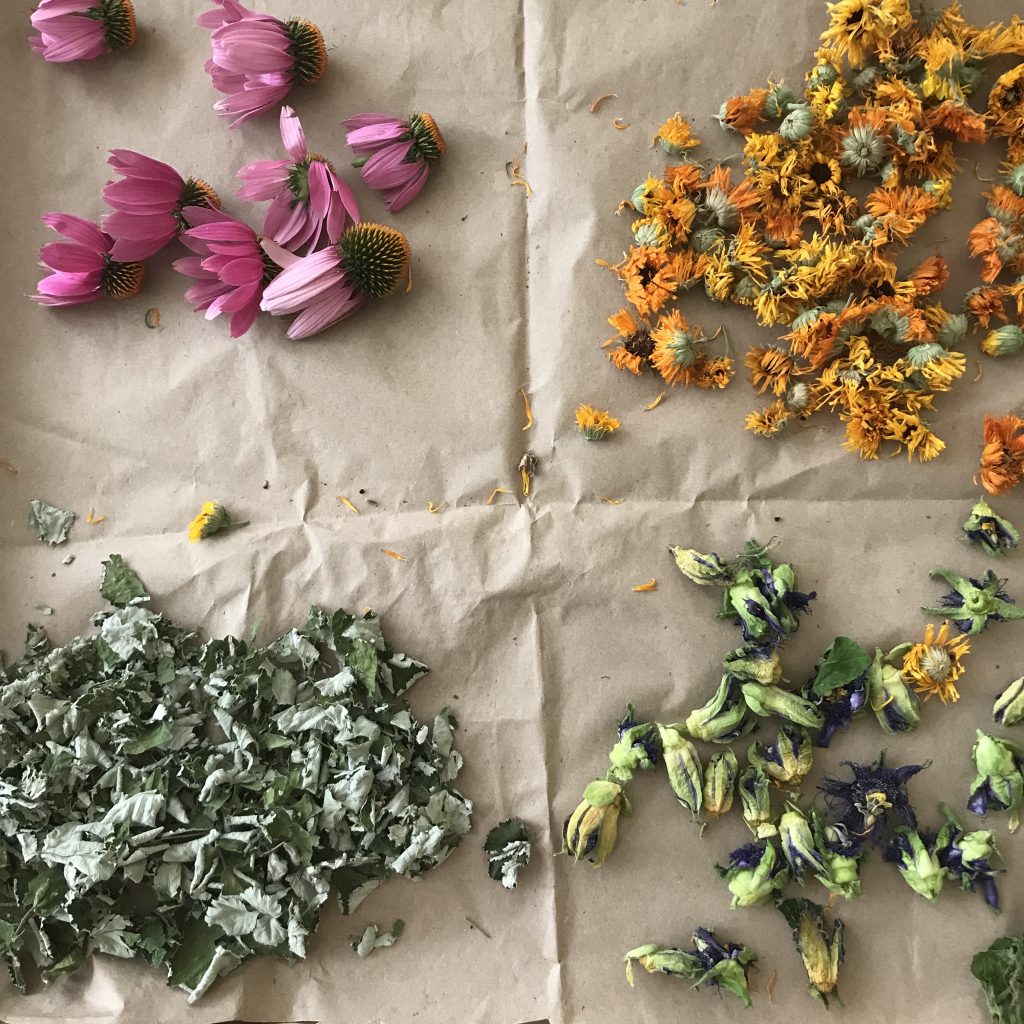
- Hibiscus: Studies have shown that regular consumption can significantly lower both systolic and diastolic blood pressure.
- Rooibos: A powerhouse of antioxidants like aspalathin, which may help protect the heart and even improve bone health by inhibiting the cells that break down old bone.
4. For the ENT: The Wise Fighter
Allergies and Asthma run in my family like blood in the veins. I lived on antihistamines to the point I could not sleep anymore with the pill. Then, I wondered what would happen if a shortage were to happen and I couldn’t source the meds for myself or my kids?
- Stinging Nettles: This wild herb is somewhat dangerous to touch. It has thin hairs that send a stinging sensation. My mother says they used to brush it on people’s backs to numb back pain. In addition to the stock of minerals it offers, Nettles contains antihistamines, which help alleviate allergies. I can attest to that for a strong stinging nettle tea weaned from taking my allergy pill. What’s even better is that it does not make you drowsy.
- Golden Rod: This plant is not just gorgeous in the garden with its golden cluster of flowers; it is another forgotten medicinal plant. For centuries, goldenrod flowers and leaves have been used for sinus congestion and infections, allergies, and the common cold.
A Gardener’s Word
While these teas are powerful, they aren’t “magic bullets.” Their true efficacy comes from consistency. Think of it like watering your plants; a single drenching won’t save a garden, but a steady, daily habit creates a thriving environment.
It is also a whole lifestyle. If your body is fed junk and overworked, natural remedies might have very little effect on it. Similar to a frying pan that is used over and over and grease keeps layering on its surface. Some drastic cleaning measures are needed to get it to shine again.
So, the next time you put the kettle on, know that you aren’t just making a drink; you’re brewing a remedy. Whether it’s a quiet cup of Chamomile to end a long day in the dirt or a spicy Ginger brew for a fussy stomach, let the plants do what they do best: bring us back to harmony.
Which herbal brew is a staple in your home? Leave a comment below and let me know your favorite ‘garden-to-cup’ remedy!